
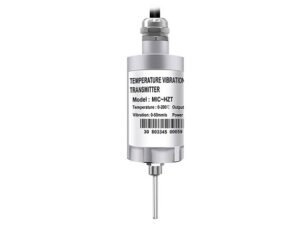
What is a K-Type Thermocouple?
A K-type thermocouple is a temperature sensor based on the thermoelectric effect, composed of a nickel-chromium alloy (positive leg, nominal composition: Ni:Cr=90:10) and a nickel-aluminum alloy (negative leg, nominal composition: Ni:Si=97:3). It measures temperature by detecting the thermoelectric potential difference at the junction of the two metals. Below are its core characteristics and applications:
Core Characteristics
-
Wide Temperature Range
-
Standard measurement range: 0°C to 1300°C (short-term use up to 1200°C; long-term use recommended below 1000°C).
-
Suitable for applications from cryogenic temperatures to high-heat processes like molten metal or ceramic sintering.
-
High Sensitivity and Linearity
-
Generates a large thermoelectric voltage (~41 μV/°C) with near-linear output, simplifying data acquisition and analysis.
-
Superior linearity compared to J-type or T-type thermocouples, reducing calibration complexity.
-
Stability and Durability
-
Strong oxidation resistance, ideal for long-term use in oxidizing or inert gas environments.
-
High mechanical strength, vibration-resistant, and corrosion-resistant for harsh industrial conditions.
-
Cost-Effectiveness
-
As a base-metal thermocouple, it is inexpensive and accounts for the largest share of thermocouple usage due to its excellent price-to-performance ratio.
Limitations
-
Environmental Suitability
-
Prohibited Environments: Vacuum, sulfur/carbon-containing atmospheres, alternating oxidizing/reducing conditions, and strongly reducing atmospheres (e.g., hydrogen).
-
Weak Oxidizing Atmospheres: Not recommended due to potential instability in thermoelectric potential.
-
Accuracy and Calibration
-
Error range: ±1.5°C to ±4°C (lower precision than platinum-based sensors like RTDs).
-
Requires periodic recalibration after prolonged high-temperature use to prevent accuracy drift caused by material lattice changes.
-
Electromagnetic Interference
-
Outputs microvolt-level signals; long-distance transmission requires shielding against interference. Use compensation cables matching the thermocouple material.
Applications
-
Industrial High-Temperature Monitoring
-
Metallurgy: Monitoring temperatures in steel furnaces and molten metal processes for real-time smelting control.
-
Chemical Industry: Tracking reactor temperatures to ensure safe chemical reactions.
-
Power Generation: Overheat protection in gas turbines and boilers to prevent equipment damage.
-
Laboratory Research
-
Material heat treatment experiments: Precise temperature control in high-temperature furnaces and electric heaters for reliable results.
-
Calibration of incubators: Provides broad temperature coverage for scientific research needs.
-
Household Appliances
-
Temperature control systems in ovens and dryers for enhanced user safety and performance.
Comparison with Other Thermocouple Types
Usage Recommendations
-
Wire Matching: Use compensation cables with identical materials to avoid introducing errors.
-
Protective Measures: Install protective sleeves in sulfur/hydrogen-rich environments to prevent metal embrittlement.
-
Regular Maintenance: Recalibrate after prolonged high-temperature exposure to ensure measurement accuracy.