
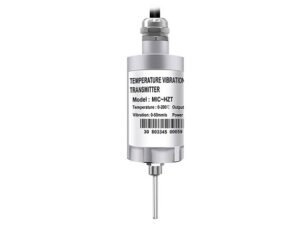
vibration sensor Measuring pump vibration typically involves three main directions: horizontal, vertical, and axial. Measuring vibration in these directions is very important for ensuring the pump's proper operation and preventing failure. Here is an explanation of vibration measurement in these three directions:

1. Horizontal Vibration
-
Horizontal vibration refers to the pump's vibration along the horizontal direction (usually the horizontal axis).
-
Horizontal vibration measurement is typically performed by installing vibration sensors on the pump casing or base. These sensors measure the amplitude and frequency of the pump's vibration in the horizontal direction.
-
Excessive horizontal vibration may indicate issues with the pump's bearings, couplings, or other critical components, which can lead to pump instability, noise, and more severe failures.
2. Vertical Vibration
-
Vertical vibration refers to the pump's vibration along the vertical direction (usually the vertical axis).
-
Vertical vibration measurement is typically performed by installing vertically-oriented vibration sensors on the pump casing or base. These sensors measure the amplitude and frequency of the pump's vibration in the vertical direction.
-
High vertical vibration may indicate issues with the pump's impeller or its… (the original text seems incomplete here).
3. Axial Vibration
-
Axial vibration refers to vibration along the direction of the pump shaft, i.e., along the pump's axis.
-
Axial vibration is often caused by impeller imbalance or bearing problems. It can lead to pump vibration, noise, and extra stress on the pump and the driving machinery.
-
Axial vibration is typically measured by installing vibration sensors at the end of the pump or the end of the pump driving machinery.
By measuring vibration in these three directions, engineers and maintenance personnel can monitor the pump's health status and promptly detect potential issues, thereby reducing downtime and repair costs, and ensuring the pump's reliability and performance.