
Have You Ever Been Overwhelmed by Sudden Equipment Failure?
Have you ever faced the frustration of a production line grinding to a halt due to a sudden equipment breakdown? Or do you find yourself constantly worried about exorbitant repair costs and unplanned downtime? Predictive Maintenance (PdM) offers enterprises a proactive strategy to safeguard their assets.
By installing real-time condition sensors on every machine and deeply integrating collected data—such as temperature and vibration—with AI-driven analytics, PdM successfully transforms traditional maintenance from reactive response to proactive planning. This significant shift not only enhances equipment reliability and operational stability but also drastically reduces the total cost of ownership throughout the equipment's lifecycle. Below, let us explore why predictive maintenance has become indispensable for modern industrial machinery.
Defining Predictive Maintenance
In simple terms, Predictive Maintenance utilizes monitoring data to analyze and forecast whether a piece of equipment is nearing failure. This allows companies to schedule repairs or replace components just before an actual breakdown occurs. Typically, industrial machinery releases early warning signals as it approaches failure, such as abnormal vibrations, temperature fluctuations, or performance deviations.
By identifying these critical indicators early and with precision, enterprises can take the lead in planning maintenance activities. This forward-looking approach effectively minimizes unplanned downtime, prevents excessive wear and tear caused by over-utilization, and keeps costs associated with unexpected failures—such as emergency part replacements and labor—at their absolute lowest levels.
Key Components of Predictive Maintenance
PdM is not a standalone technology but a comprehensive Industrial Intelligence Framework. Powered by the Internet of Things (IoT), the PdM process is divided into three interconnected phases: Data Collection, Analysis & Decision-Making, and Execution. Together, they form a closed-loop maintenance cycle.
-
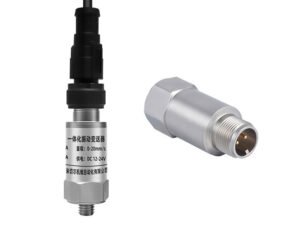
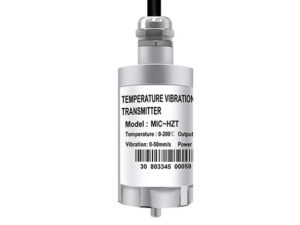
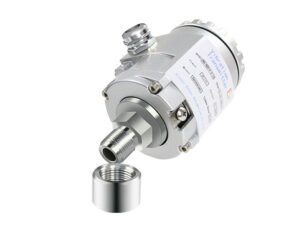
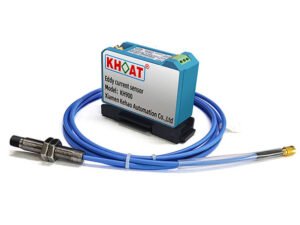
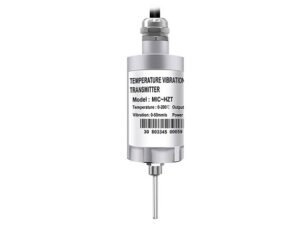
Data Collection: The core task here is to convert the physical operating state of the equipment into quantifiable data. Various condition sensors—including vibration sensors, temperature, humidity, pressure, and noise sensors—are utilized to accurately and continuously capture operational data, which is then uploaded to a designated platform via IoT technology in real-time.
-
Analysis & Decision-Making: This is the "brain" of PdM. It transforms raw data into intelligible health insights and forecasts future risks. By leveraging Artificial Intelligence (AI), Machine Learning (ML), statistical modeling, and Deep Learning, the system identifies abnormal patterns within complex datasets, diagnoses latent hazards, and predicts the Remaining Useful Life (RUL) of the equipment.
-
Execution: Based on the diagnostic results, the system triggers automated responses according to preset rules or notifies maintenance personnel to take action. Once repairs are complete, new real-time data is fed back into the analysis layer. The system verifies whether vibration patterns, temperature curves, and current signals have returned to normal, allowing the model to "learn" and improve future prediction accuracy.
Significant Benefits of Predictive Maintenance
Implementing PdM delivers tangible advantages to the factory floor, as evidenced by the following metrics:
-
Reduced Maintenance Costs: Studies show that PdM strategies can lower maintenance costs by 25% – 30%.
-
Elimination of Production Downtime: Data indicates a 70% – 75% reduction in production breakdowns, ensuring a continuous workflow.
-
Decreased Equipment/Process Downtime: Practice has proven that downtime can be reduced by 35% – 45%, maximizing equipment utilization.
-
Boosted Productivity: Enterprises can see a 20% – 25% increase in overall production efficiency.
-
Material Cost Savings: Research suggests savings of up to 19.4% in material costs through resource optimization.
-
Inventory Reduction: PdM can reduce the need for MRO (Maintenance, Repair, and Operations) inventory by 17.8%.
-
High ROI: The average payback period for a PdM investment is only 14.5 months, representing high investment value.
Comparison of Maintenance Strategies
Currently, industrial maintenance is categorized into three types:
-
Corrective Maintenance: A reactive "run-to-failure" approach where repairs only happen after a breakdown.
-
Preventive Maintenance: Relies on experience and fixed schedules to intervene before a potential failure.
-
Predictive Maintenance: Uses continuous monitoring of critical components to diagnose latent faults while the machine is running, achieving true proactive management.