
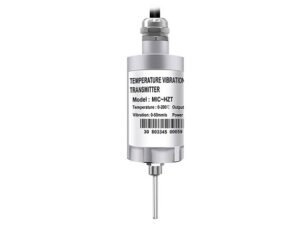
In the field of temperature measurement, thermocouples and Resistance Temperature Detectors (RTDs) are two of the most critical and widely used sensors. Each is based on distinct physical principles, utilizes different materials, and offers unique characteristics in terms of measurement range, signal output, wiring, accuracy, and stability. Consequently, they are suited for vastly different application scenarios. This article provides a detailed comparison of Thermocouples and RTDs across these key dimensions.
1. Divergent Principles
The fundamental difference lies in their operating physics.
-
Thermocouples operate based on the Seebeck Effect. This phenomenon occurs when two dissimilar metal conductors (or semiconductors) are joined into a closed loop; if the two junctions are at different temperatures, an electromotive force (EMF), or thermoelectric potential, is generated. The magnitude of this EMF depends on the material properties and the temperature gradient between the junctions. By measuring this voltage, the temperature difference can be determined. This principle makes thermocouples exceptionally suited for high-temperature measurements, as the thermoelectric effect remains significant even at extreme heat.
-
RTDs (Resistance Temperature Detectors) rely on the characteristic that the electrical resistance of a metal conductor or semiconductor changes with temperature. Generally, as temperature rises, the resistance increases. By measuring this change in resistance, the temperature can be calculated. This principle allows RTDs to achieve high precision and stability, particularly in low-to-medium temperature ranges.
2. Material Composition
The materials used in their construction are also markedly different.
-
Thermocouples are typically composed of two different metals or alloys. Selection is based on their thermoelectric properties and chemical stability. Common types include Type K (Chromel-Alumel), Type T (Copper-Constantan), and Type S (Platinum Rhodium 10%-Platinum). Each type has a specific range and set of advantages.
-
RTDs are generally made from pure metals such as Platinum (Pt), Copper, or Nickel. Platinum RTDs (like the Pt100) are the most widely used due to their high accuracy and excellent long-term stability. Additionally, thermistors made from semiconductor materials are used in specialized applications.
3. Measurement Range
The two sensors serve different thermal scales.
-
Thermocouples have a much broader range, spanning from -40°C to 1600°C or even higher. This makes them ideal for high-temperature environments in mechanical manufacturing, power generation, petroleum, chemical processing, and metallurgy.
-
RTDs are generally limited to a range of -250°C to 500°C (though some specialized models reach 600°C). While their high-temperature capability is lower than that of thermocouples, they are the preferred choice for applications requiring high precision in mid-to-low temperatures, such as laboratory equipment and food processing.
4. Signal Output
-
Thermocouples output an induced voltage (mV) that changes with the temperature gradient. Because this signal is usually very weak (millivolts), it requires amplification and processing for accurate measurement.
-
RTDs output a resistance change ($\Omega$). To measure this, a bridge circuit is typically used to convert the resistance variation into a voltage or current signal.
5. Wiring Methods
-
Thermocouples usually employ a two-wire system. Since they generate their own voltage based on the Seebeck effect, they do not require extra wires to compensate for lead resistance (though they often require specific "compensation wires" to maintain accuracy back to the transmitter).
-
RTDs offer two-wire, three-wire, and four-wire configurations. The three-wire and four-wire systems are essential for high-precision applications because they effectively eliminate the impact of lead wire resistance on the measurement.
6. Accuracy and Stability
-
Thermocouples feature high sensitivity and fast response speeds, making them superior for applications requiring quick detection of temperature changes. However, their accuracy is susceptible to wire aging and "cold junction" stability, requiring more frequent calibration.
-
RTDs provide superior accuracy and stability. They are less affected by external interference and offer higher resolution, making them the gold standard for precision-critical environments.
7. Application Scenarios
-
Thermocouples are best for harsh, high-temperature industrial environments. They are durable and reliable in the face of vibration and extreme heat (e.g., furnaces, jet engines, smelting).
-
RTDs are widely used in automated control systems, laboratories, food, and pharmaceuticals. They are ideal for stable environments where high-precision monitoring is mandatory and the temperature does not exceed 500-600°C.
Conclusion
In summary, thermocouples and RTDs differ significantly in principle, material, range, signal, wiring, and precision. When selecting a temperature sensor, one must balance the required temperature range, the need for accuracy, and the environmental conditions of the specific application.