
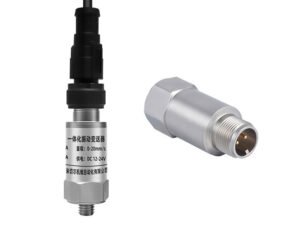
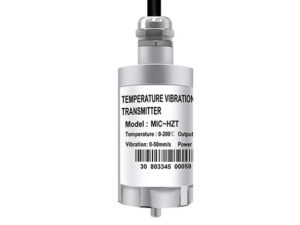
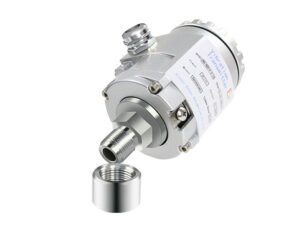
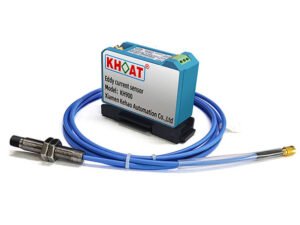
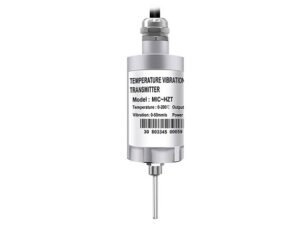
In complex industrial sites, there is a device that, despite its small size, shoulders the heavy responsibility of ensuring system safety and stable operation—the pressure transmitter. Today, let’s take a detailed look at this "pressure steward" of the automation world.

I. What Role Does a Pressure Transmitter Play in Industrial Production?
Simply put, a pressure transmitter acts as the "pressure translator" of an industrial system. Its primary task is to convert various liquid or gas pressure signals into standardized electrical signals that a control system can understand.
Four Core Functions in Practical Applications:
-
Real-time Pressure Monitoring: Like a tireless sentry, it monitors pressure changes inside pipes, tanks, or equipment 24/7. Whether it is the reactor pressure in a chemical plant or water pressure fluctuations in a supply network, nothing escapes its "watchful eye."
-
Signal Conversion and Transmission: When a pressure change is detected, the transmitter converts the physical quantity into a 4-20mA current signal or a digital signal. This standardized signal can be transmitted over hundreds of meters to a PLC or DCS system in a control room for remote monitoring.
-
Participation in Automatic Regulation: In closed-loop control systems, the real-time data it provides is the direct basis for adjusting valve openings or controlling pump speeds. For example, if the water supply pressure is detected to be low, the system automatically increases the pump speed to ensure stability.
-
Safety Assurance: If abnormal pressure (too high or too low) is detected, it immediately triggers an alarm or even an interlock shutdown to prevent equipment damage or accidents. It is an indispensable safety barrier in industrial production.
Application Scenarios You Might Not Know:
-
Petrochemicals: Monitoring oil pipelines to prevent leaks.
-
Smart Water Utilities: Regulating water network pressure to save energy.
-
HVAC: Maintaining a comfortable air pressure environment in buildings.
-
Food & Pharma: Ensuring fermentation tanks and reactors operate under safe pressure.
-
New Energy: Monitoring wind turbine hydraulic systems and solar thermal systems.
II. How Does It Work? — Revealing the Internal Mechanism
The workflow consists of three main steps:
Step 1: Sensing the Pressure
When the medium pressure enters the transmitter through the process connection (usually a threaded interface), it first acts on the isolation diaphragm. This diaphragm acts as a "protective shield," transferring pressure while protecting the delicate internal components from corrosive media. Commonly used 316L stainless steel diaphragms can withstand most industrial media.
The diaphragm transfers the pressure to the sensing element. Mainstream sensing technologies include:
-
Strain Gauge: Acts like a tiny "spring" that deforms under pressure, causing a change in resistance.
-
Piezoresistive (MEMS Technology): Utilizes the piezoresistive effect of silicon wafers; offers high accuracy and small size.
-
Capacitive: Changes in the distance between electrode plates cause a change in capacitance; known for excellent stability.
-
Piezoelectric: Certain crystals generate a charge when compressed; suitable for dynamic pressure measurement.
Step 2: Signal Conversion and Processing
The raw signal output by the sensor is very weak (usually in millivolts). It must undergo:
-
Signal Amplification: A dedicated amplifier boosts it to a processable range.
-
Temperature Compensation: An internal temperature sensor monitors ambient changes and automatically corrects errors caused by temperature fluctuations.
-
Linearization: Ensures the output signal has a precise linear relationship with the pressure change.
Step 3: Standardized Output
The processed signal is finally converted into an industry-standard signal:
-
4-20mA Current Signal: Strong anti-interference capability, ideal for long-distance transmission (most common).
-
0-10V Voltage Signal: Simple and intuitive, suitable for short-distance applications.
-
Digital Signals (HART, Profibus, etc.): Can transmit more information and support remote configuration.
III. How to Choose the Right Pressure Transmitter
With a wide array of products on the market, selection requires considering several key factors:
-
Define Measurement Needs:
-
Range: It is appropriate to choose a range about 30% higher than the actual maximum pressure.
-
Accuracy: 0.5% is usually sufficient for general industrial use; precision control may require 0.1% or higher.
-
-
Consider Medium Characteristics:
-
Corrosive media require materials like Hastelloy.
-
Viscous media require diaphragms that are easy to clean.
-
High-temperature media require heat-resistant models.
-
-
Installation Environment:
-
Explosion-proof: Hazardous environments must use certified explosion-proof products.
-
Protection Rating: Outdoor or humid environments require IP65 or higher.
-
-
Signal and Power Matching:
-
Confirm the input signal type of the control system.
-
Check if the power supply voltage matches (usually 24VDC).
-
IV. Technical Trends: Intelligence and Integration
Modern pressure transmitters are no longer simple "pressure-to-electric" converters. New generation smart transmitters feature:
-
Self-diagnosis: Real-time monitoring of their own health status with early warnings.
-
Remote Configuration: Modify parameters remotely without on-site operation.
-
Multi-parameter Measurement: Some products can measure pressure and temperature simultaneously.
-
Wireless Transmission: Reduces wiring costs and increases installation flexibility.
Conclusion:Though a small link in the industrial automation chain, the pressure transmitter is vital to system safety and efficiency. As the Industrial Internet of Things (IIoT) evolves, this "pressure steward" will continue to become smarter, more precise, and more reliable.