
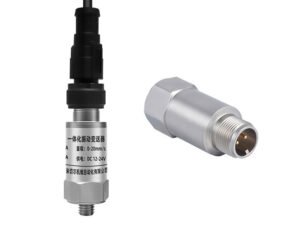
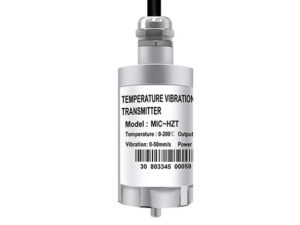
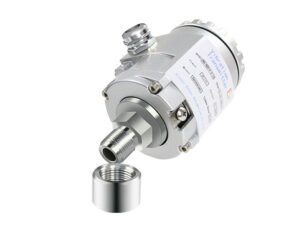
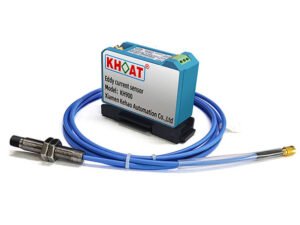
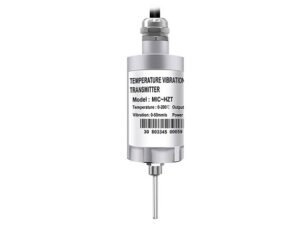
In fields such as industrial automation, automotive electronics, medical devices, and the Internet of Things (IoT), Pressure sensors are indispensable as key sensing elements. With technological advancements, various pressure sensors based on different principles have emerged, each with unique performance characteristics and application scenarios. This article provides an in-depth analysis of technical classifications to help you comprehensively understand these core devices.

Core Classifications and Technical Principles
1. Strain Gauge Pressure Sensors
-
Working Principle: Based on the strain effect of metallic or semiconductor materials. When an elastic diaphragm deforms under pressure, the resistance of the attached strain gauges changes. This change is converted into an electrical signal via a Wheatstone Bridge.
-
Technical Features: Robust structure, wide measurement range (0.1Pa to 100MPa), and high accuracy (up to 0.1% FS).
-
Typical Applications: Industrial process control, heavy machinery, and pressure transmitters.
2. Piezoresistive Pressure Sensors (MEMS Technology)
-
Working Principle: Utilizes the piezoresistive effect of single-crystal silicon. Four piezoresistors are integrated onto a silicon diaphragm using micro-machining (MEMS) technology to form a full-bridge circuit.
-
Technical Features: Compact size, high sensitivity, fast frequency response, and suitable for mass production.
-
Typical Applications: Automotive manifold absolute pressure (MAP) sensing, medical equipment, and consumer electronics.
3. Capacitive Pressure Sensors
-
Working Principle: Detects pressure by sensing changes in the distance between capacitive plates. Pressure causes the diaphragm to displace, altering the capacitance value between two electrodes.
-
Technical Features: Low power consumption, low temperature sensitivity, and excellent for measuring micro-pressure or differential pressure.
-
Typical Applications: HVAC systems, barometric pressure measurement, and liquid level detection.
4. Piezoelectric Pressure Sensors
-
Working Principle: Based on the direct piezoelectric effect of piezoelectric materials. When crystalline materials are subjected to force, a surface charge proportional to the pressure is generated.
-
Technical Features: Excellent dynamic response, suitable for high-frequency dynamic pressure measurement, and self-powering (requires no external power for the sensing element).
-
Typical Applications: Engine combustion monitoring, blast shockwave measurement, and acoustic sensing.
-
Limitation: Unsuitable for static pressure measurement due to charge leakage.
5. Resonant Pressure Sensors
-
Working Principle: Utilizes the frequency characteristics of a resonant element. Pressure changes alter the stress state of a resonant beam, leading to a change in its natural frequency.
-
Technical Features: Extremely high accuracy (up to 0.01% FS), excellent long-term stability, and direct digital signal output.
-
Typical Applications: Precision instruments, aerospace air data systems, and primary pressure calibration standards.
6. Optical Pressure Sensors
-
Working Principle: Based on the photoelastic effect or Fiber Bragg Grating (FBG) technology. Pressure induces changes in the refractive index of optical elements or the wavelength of the grating.
-
Technical Features: Intrinsically safe, immune to electromagnetic interference (EMI), and suitable for extreme environments.
-
Typical Applications: Downhole oil and gas monitoring, high-voltage electrical equipment, and biomedical sensing.
Key Parameter Guide for Sensor Selection
-
Measurement Range: Select a range approximately 1.5 times the maximum actual working pressure.
-
Accuracy Class: Industrial grade is typically 0.5%–1%, while precision applications require 0.1% or higher.
-
Output Signal: Analog (4-20mA, 0-5V) or Digital (I2C, SPI, HART).
-
Media Compatibility: Ensure corrosion resistance of wetted materials (e.g., Stainless Steel, Ceramics).
-
Environmental Adaptability: Consider operating temperature range and Ingress Protection (IP67/IP68).
-
Long-term Stability: The annual drift rate is critical for systems in continuous operation.
Industry Application Analysis
-
Automotive: Tire Pressure Monitoring Systems (TPMS), engine management, and emission control.
-
Industrial Automation: Process control, fluid monitoring, and compressor management.
-
Healthcare: Ventilators, blood pressure monitors, and infusion pumps.
-
Consumer Electronics: Altimeters in drones, smart wearables, and home appliances.
-
Environmental Monitoring: Weather stations, hydrological monitoring, and pollution control.
Conclusion
Selecting a pressure sensor requires a comprehensive balance of the measurement object, environmental conditions, accuracy requirements, and budget. While strain gauge and piezoresistive sensors dominate the industrial market due to their maturity and cost-effectiveness, resonant and optical sensors offer unique value in specialized high-precision or hazardous applications. As Industry 4.0 and the IoT continue to evolve, pressure sensors will advance toward being smarter, more networked, and increasingly reliable.