
Online vibration monitoring is a critical task for ensuring the stability of key equipment. Among the various solutions available, vibration transmitters with 4-20mA output have become the preferred choice for many users due to their easy installation, high cost-effectiveness, and direct integration with control systems.
I. Selecting the Right Type of vibration sensor
Choosing the appropriate sensor depends on the operating environment and the specific parameters you need to monitor:
-
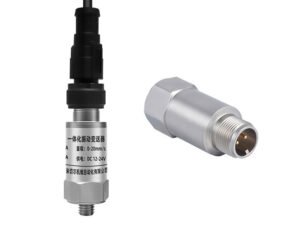
General-Purpose Vibration Transmitters (Indoor)
-
Best for: Motors, blowers, and fans located indoors with stable operating conditions. The surface temperature of the device should remain below 80°C.
-
Features: Highly economical and easy to disassemble. They typically offer side-exit or top-exit cabling options to suit different space requirements.
-
-
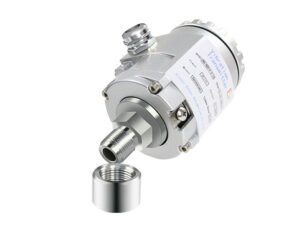
Integrated Waterproof Sensors
-
Best for: Outdoor equipment or construction environments with harsh conditions.
-
Features: Designed to be dustproof and waterproof, these sensors ensure reliable performance in ambient temperature environments exposed to the elements.
-
-
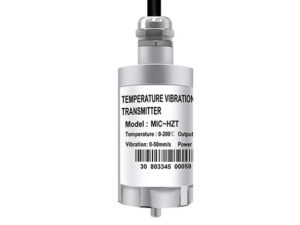
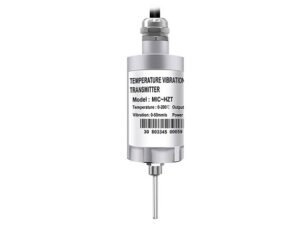
Vibration & Temperature Composite Sensors (Dual-Parameter)
-
Best for: Applications requiring simultaneous monitoring of both mechanical vibration and thermal health.
-
Features: These sensors can monitor either the surface temperature of the housing or the internal bearing temperature for more precise diagnostics.
-
-
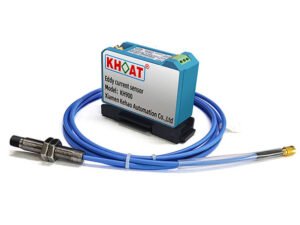
Split-Type Sensors (Limited Space/Periodic Testing)
-
Best for: Compact installation spaces, measuring high-frequency acceleration, or temporary monitoring where sensors are frequently moved.
-
Features: Smaller form factor at the measurement point, making them ideal for periodic inspections and specialized frequency analysis.
-
II. Mounting and Fixation Methods
The quality of the installation directly affects the accuracy of the data. Below are the common fixation methods:
1. Threaded Stud Mounting (Recommended)
This is the most reliable method for ensuring high-frequency signal transmission.
-
Standard: Drill and tap an M8 or M5 hole on the equipment, then secure the sensor using a double-ended stud.
-
Welding: If drilling is not permitted, a mounting stud or base can be welded onto the equipment surface.
-
Adapters: For imported machinery that often comes with M10 holes, M8-to-M10 conversion studs can be used for a secure fit.
2. Adhesive Mounting (Gluing)
-
Best for: Low-vibration applications where drilling or welding is not feasible.
-
Caution: Ensure the contact surface is clean and flat. Do not apply excessive glue; a thick layer acts as a shock absorber (buffer), which can dampen the vibration intensity and lead to inaccurate readings.
3. Magnetic Base (Optional)
-
Best for: Temporary measurements or portable route-based inspections.
-
Note: While convenient, magnetic bases are generally not recommended for permanent online monitoring as they may shift or lose high-frequency clarity compared to hard-mounting.